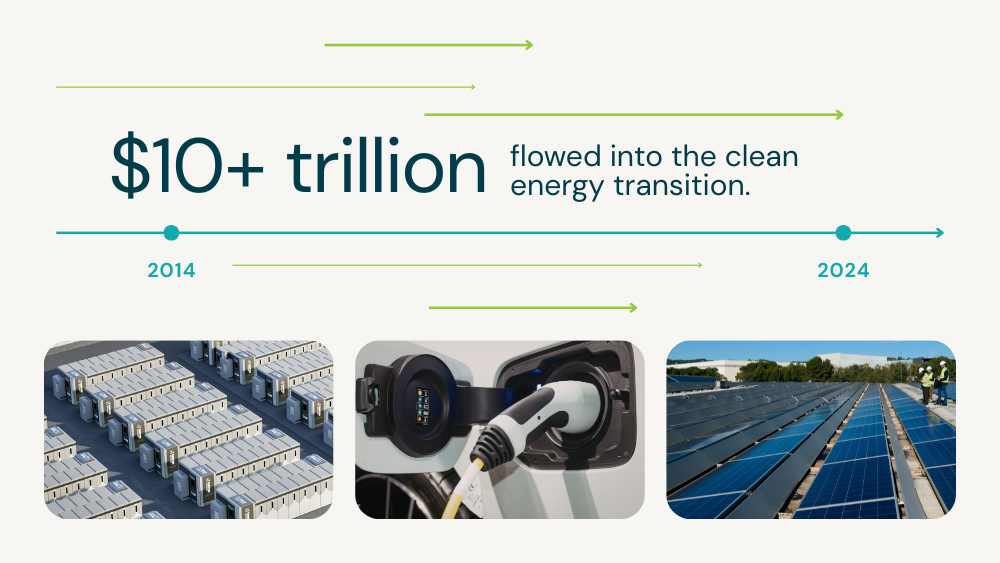
The Paris Agreement marked a turning point not because it solved climate change, but because it reset expectations. For the first time, nearly 200 countries sent a coordinated signal that emissions must fall and energy systems must change. That signal mattered less for diplomats than for markets.
As Laurence Tubiana, one of the architects of Paris, has noted, the agreement helped establish a shared assumption: that the transition was inevitable. Capital responded accordingly.
A decade later, the limits of grand climate diplomacy are clearer. COPs cannot build grids, deploy solar farms, or finance resilient infrastructure. What they can do—at their best—is de-risk direction, providing enough policy coherence for capital to move.
That is precisely what the data now reflects. Global emissions are no longer accelerating unchecked. The UN projects a 10% decline from 2019 levels by 2035, and worst-case warming scenarios have retreated. The world is still on track for roughly 2.8°C of warming by 2100—far above Paris ambitions, but materially better than the 4°C outcomes once considered plausible.
Progress, in other words, is real—but partial.